
Ἑλένη (![[personal profile]](https://www.dreamwidth.org/img/silk/identity/user.png) lest) wrote in
lest) wrote in ![[community profile]](https://www.dreamwidth.org/img/silk/identity/community.png) ximilialog2023-01-10 07:58 pm
ximilialog2023-01-10 07:58 pm
lest) wrote in ximilialog2023-01-10 07:58 pm


Entry tags:
OPEN: FUNERAL GAMES
CHARACTERS: Everyone
LOCATION: Stoneset
DATE: About two weeks into the mission.
CONTENT: Helen hosts funeral games in remembrance of her brothers.
WARNINGS: TBD.
In her homeland, the world would have come to a stop. No less did the Dioskouroi deserve. Marshals of the people, princes among men, sons of Sparta: Castor the horse-breaker and Polydeukes the boxer. Helen’s brothers. Helen’s brothers whom the earth has covered for the last ten years.
Helen knows not where they are buried, were they bidden farewell with the honors accorded to them, did they complete their voyage through the gates of Hades. Her mourning comes ten years late. Love and duty, however, demand their remembrance, and Helen—meager as this offering is in comparison—must perform her task. The news spreads through Alydhion and, on the day of the Games, the lilt of music and the clamor of voice rise from the marked field.
Finely robed, a layer of silk preserving her modesty, and her face and neck painted white and scarlet, eyes heavily outlined in kohl, Helen steps forward. In a voice clear as a bell, she declares everyone welcome and expresses her gratitude and on her brothers' behalf. Once queen, here sweetened by the bard's gift with words, her voice is arresting as a spell as she narrates a simplified tale of Castor and Polydeukes, their bravery, their feats, their triumphs. When finished, she unveils the olive wreath, which will crown each of the victors.
Raising it for all to see, she bids the participants luck, and declares the commencement of the Games.
Eight games are scheduled for the day with some held simultaneously, meaning participants will only be able to participate in one game each. In addition to the winner's olive wreath, both the winner and the runner-up for each game will receive a prize. The games and their rules are listed below:
There is plenty to do even for those who choose not to partake of the Games. Stands were quickly erected for observers to follow the action. Vendors set up near the scene to hawk their goods: food, drink, trinkets. Betting pools are quickly established for every event for anyone to win big—or lose abysmally. Once the games are completed, children and adults alike are seen trying their hand at some of the events. Music, laughs, and shouts fill the air.
Despite its somber origins, the day proves joyous, and the celebrations continue into the evening. Dance, eat, drink…and perhaps take the time to remember one’s own cherished dead.
LOCATION: Stoneset
DATE: About two weeks into the mission.
CONTENT: Helen hosts funeral games in remembrance of her brothers.
WARNINGS: TBD.
SING, GODDESS…
In her homeland, the world would have come to a stop. No less did the Dioskouroi deserve. Marshals of the people, princes among men, sons of Sparta: Castor the horse-breaker and Polydeukes the boxer. Helen’s brothers. Helen’s brothers whom the earth has covered for the last ten years.
Helen knows not where they are buried, were they bidden farewell with the honors accorded to them, did they complete their voyage through the gates of Hades. Her mourning comes ten years late. Love and duty, however, demand their remembrance, and Helen—meager as this offering is in comparison—must perform her task. The news spreads through Alydhion and, on the day of the Games, the lilt of music and the clamor of voice rise from the marked field.
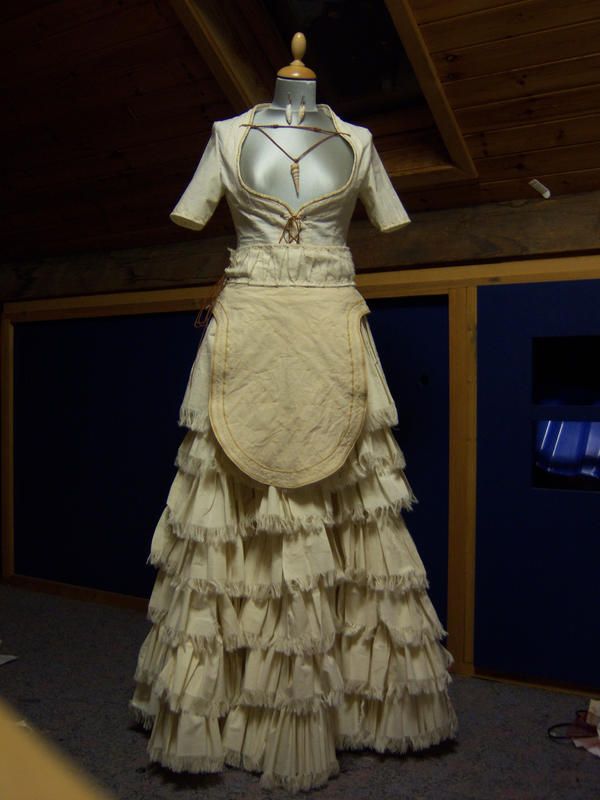
Finely robed, a layer of silk preserving her modesty, and her face and neck painted white and scarlet, eyes heavily outlined in kohl, Helen steps forward. In a voice clear as a bell, she declares everyone welcome and expresses her gratitude and on her brothers' behalf. Once queen, here sweetened by the bard's gift with words, her voice is arresting as a spell as she narrates a simplified tale of Castor and Polydeukes, their bravery, their feats, their triumphs. When finished, she unveils the olive wreath, which will crown each of the victors.

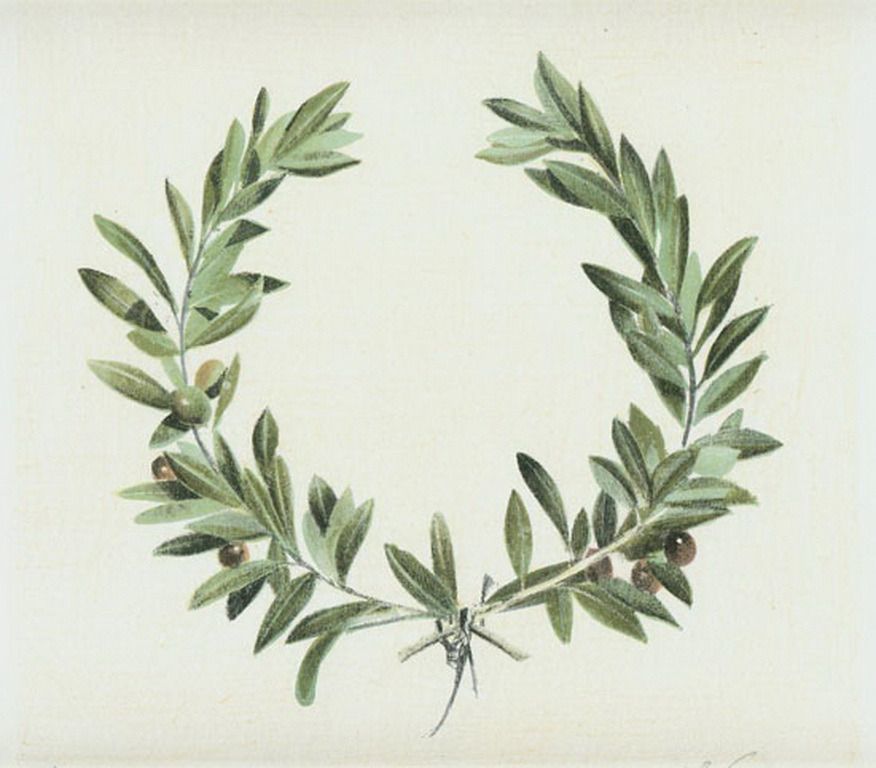
Raising it for all to see, she bids the participants luck, and declares the commencement of the Games.
THE GAMES
Eight games are scheduled for the day with some held simultaneously, meaning participants will only be able to participate in one game each. In addition to the winner's olive wreath, both the winner and the runner-up for each game will receive a prize. The games and their rules are listed below:
BOXING: Participants are given strips of leather to wrap around their hands for protection. Each match consists of a single round. Matches continue until one participant surrenders or is incapacitated. Holds and gouging with fingers and nails are not permitted.
WRESTLING: A single throw is necessary to win a match. A throw is counted if any part of the back of the opponent touches the ground. If both fall, the throw is not counted for either. Tripping is allowed.
FOOT-RACE: A single sprint from one side of the field to the other (approximately 150 meters).
SINGLE COMBAT: Fencing except very dangerous. Each match consists of a single round, ending when one participant surrenders or is incapacitated. Armor is permitted (and frankly encouraged).
DISCUS: Participants throw a solid bronze disk (weighing approximately 10lbs) as far as possible. One attempt per participant.
JAVELIN: Participants throw a slender spear, and attempt to land it within a narrow marked area, testing both strength and aim. One attempt per participant.
ARCHERY: Archers will be tasked with hitting a target 70m away. The winner will be determined by whoever comes closest to hitting the bullseye.
HORSE RACE: Riders and their mounts must complete three circuits around the field. Horses will not be provided; remember to bring your own.
A GRAND FEAST
There is plenty to do even for those who choose not to partake of the Games. Stands were quickly erected for observers to follow the action. Vendors set up near the scene to hawk their goods: food, drink, trinkets. Betting pools are quickly established for every event for anyone to win big—or lose abysmally. Once the games are completed, children and adults alike are seen trying their hand at some of the events. Music, laughs, and shouts fill the air.
Despite its somber origins, the day proves joyous, and the celebrations continue into the evening. Dance, eat, drink…and perhaps take the time to remember one’s own cherished dead.
QUESTIONS
WINNER'S PODIUM
no subject
Game: foot race
Position: winner!
no subject
“Swift-footed Rand,” she greets him. Once he bows his head, she lays the wreath carefully amid the red curls that it will not slip nor fall.
Standing this close, she can admit with a touch of pride, “I cheered for you in my heart.”
closed. (cw: animal sacrifice, thoughts of death)
This day, there will be no great pyre, one hundred feet long, and one hundred wide. Offerings of honey and oil will not be piled within it nor droves of animals sacrificed to sanctify the hot flames. Wine will not be poured through the night that the fire may burn wilder, hotter, and consume the bodies laid upon it—nor will it be doused in the morning with more wine, the cinders watched as they cooled allowing Helen to sift through them for the white bones of her beloved brothers.
She should have been present to prepare and send her brothers off. Whether by the goddess’ art—or Helen’s own whim—she was instead far away. Was she already aboard the ships when the darkness closed around clever Castor? Or was it when her foot stepped upon the sands of her destination that nimble Polydeukes laid eyes upon the dark waters of the Styx?
On the station, Helen wove and wove. Her fingers produce a tight bodice, which she laces beneath her breasts. The great, flounced skirt widens around her legs with every layer. Gold are her earrings; glass the bead necklaces layered around her neck. Her face and neck she paints stark white. Scarlet are her ears, her lips, the suns at her cheeks, her forehead, her chin. With kohl she outlines her eyes and draws over her brows. Her skin glistens, rubbed with sweet-smelling unguents.
The woman in the mirror proves a stranger to her. But it is her reflection that was known to Castor and Polydeukes: Queen of Sparta, daughter of Leda and wide-seeing Zeus, wife of Menelaos, a mother, a sister. Argive Helen who had never seen the great walls of Ilios.
Barefoot, her hair unbound, Helen rises before the small group invited to this more intimate part of the ceremony. Two calves stand beside her—a rare twin birth. Her hand is gentle upon their heads, delicate as she strokes the soft fur of their necks.
She tells the tale of Castor and Polydeukes: born of an egg as Helen and Clytemnestra were. Castor, son of a mortal man, who could tame a horse with a look and a touch; Polydeukes, sired by the king of the gods, ferocious warrior and undefeated boxer. She tells of how they participated in the great hunt for the Calydonian boar. She tells how they assisted the Argonauts in their quest for the Golden Fleece. She tells of how they were children still when she was stolen from the banks of the river. They raised an army and crossed the lands between and threw Athens bare to rescue her. She paints a portrait of heroes before her voice finally breaks in a lament: “Would your doom had claimed me instead! Ill-fated, we are—you bound to this evil dog of a sister you were given and I—doomed to carry on when I would happily lay beneath the earth with you, my brothers. I chased after you once, through fields and over hills—ten years I waited for you, searched for you in every face massed around the walls—but you had gone too far for my sorry feet to follow.”
Weeping, she draws the knife gifted to her. She takes the blade to her hair. In chunks, she hacks through it until the soft ends tickle her neck. Her hair traces the path into the fire—something of hers to join her brothers. The second sacrifice follows after. She puts the edge of the blade to each calf’s neck and draws it smoothly. Blood soaks into the greedy earth.
She directs the carving. The fatty thigh bones are fed first to the fire—a sacrifice to faraway gods. The rest of the animals are carved and roasted to be distributed among those present. Wine is present in copious amounts to accompany the bread and honey and olive oil set out. Helen eats, though little, and joins in conversation.
In her hands, she holds the two bronze fibulae, which had once adorned the twins’ clothing.
no subject
He hadn’t directly spoken with many people about their regrets, it felt like something of a faux pas. Or at the very least, an intimacy that had to be earned, not stumbled into. But there was a strong, clear sense that loss was the thing that tied most of them together here…why give up so much if not to reconcile some kind of great loss? What else could there be? What else was worth it?
He listens carefully while she speaks, and it’s like hearing the most incredible story. It wasn’t like funerals he’d been to at home, and in some ways it felt frightening, but…in another light, there was something cathartic about it too. Being so close to death when you were mourning, almost seemed right. He could almost let himself think about the people he missed too, in that way where you looked at something, not directly, but in the peripheral. It was still too close.
“Helen?” He approaches her only after she seems, for the moment, finished conversing with other people in attendance, not wanting to interrupt. Nervous about what he could possibly say to her that someone older and wiser hadn’t already said. In her grief, and in the stark warm light of the fire, she was intimidating. When she faces him he holds out a cutting from a plant to her, and it suddenly seems very inadequate. “I asked someone in the gardens here what people give when…someone dies.”
The flower was long-stemmed and dull; more greenery than bloom with a thorny, woody stalk that was rough to the touch. It wasn’t the right season, which the gardener had warned Finn about, but there wasn’t anything that could be done about it.
“You can do what you want with it,” Finn reassures her. “Burn it, even.”
no subject
Yet she holds her head up and her voice is steady when she asks, “Why would I burn a gift, dear one?”
Finn is correct: as a flower, it is a poor one. The brightness of the bloom is gone. She must take care to hold it lest she prick a finger. The stalk is especially rough against the fine skin of her hands. Yet to a woman who cannot be anything but beautiful, it is perfect in its imperfection. She has never seen herself in the delicate purple petals or the valuable red stamen of saffron; but she does recognize her pain and sorrow in this one.
Helen glances at the open seat beside her.
“Will you sit with me?”
no subject
“Of course,” Finn sits next to her, smiling sheepishly at the question. “I didn’t think you were gonna put it in vase with water. Some stuff’s more about the idea than the thing.”
no subject
Finn’s flower sits on her lap beside her brothers’ fibulae. She turns her head toward the gathering. The firelight gives her a bronze cast. Her sigh is a heavy exhale.
“I worry for my sister alone.”
Clytemnestra’s sister, her husband—gone far from her. Iphigenia would be of an age with Hermione, both girls near twenty. But when the ships sailed Clytemnestra’s children were young still. Orestes was a toddler. Her sister, able administrator that she is, would have shouldered the responsibility for the funeral. But that should not have been hers. Another occasion in which Helen made the choices and Clytemnestra bore the consequences.
Should the gods grant her the kindness of seeing her sister again, Helen will go to her knees before Clytemnestra and beg her forgiveness. No less did she deserve for the sorrows Helen brought to her house.
no subject
He shifts his gaze back to her face for a moment, in profile just as lovely as it was from any other angle, but just as sad too. He lets his shoulders relax while she speaks, clasping his hands together on his lap for lack of knowing what else to do with them. He never knew what to do with himself when he wasn’t doing something.
“My brothers are both older than me…so I think, I hope they’re probably okay without me.” But he missed them. “What’s your sister’s name? Do you miss her?”
no subject
They came into the world together. Two eggs Leda laid after Lord Zeus came to her in the guise of a swan. From one, the Dioskouroi broke free. From the other, twin sisters, though little alike.
“We did everything together as children. We shared a chamber, playmates, attendants, lessons… On our fourteenth year, we each wedded one of the sons of Atreus. I remained in Sparta. Through Menelaos' marriage to me, my stepfather, King Tyndareus, named my husband his successor. Clytemnestra went with her husband; she is Queen of Mycenae.
“I saw her only infrequently after. We each had our duties: I, to Sparta; she, to Mycenae. She had her children. I had my daughter.” Her lungs strain against the tightness of her ribs. The pang of missing her sister is strangely sweet. So long as Clytemnestra walks the earth, Helen has not been left wholly alone.
Her hand comes to lie over Finn's arm. Through her grief, she regards him kindly. “When you are with your brothers again, do not neglect them. The time spent together is never as long as we wish.”
no subject
And Helen... she'd been married? Became a princess? Forced apart from the sister that meant so much to her? And now her brothers were dead, her daughter was somewhere too far for her to reach and it didn't seem fair. The injustice set Finn's teeth on edge, anxious energy travelling through him like small electric shocks.
All around them, food and wine flowed freely, and he finds his mind straying almost in self protection. Had Helen eaten? Did she need to drink something? Was she cold? Maybe he could get her a shawl or something? These were all solvable problems, ones that held particular appeal in the face of such thoroughly unsolvable ones.
It was all just so unfair.
"I won't. I promise." Finn scrubs at his eyes, heading off some errant wetness there before it turned to fullblown tears. This was dumb. He was supposed to be her champion. "Is there anything I can do for you? I... I know sometimes it just needs to hurt for a while, but you can't forget to take care of yourself."
no subject
For ten years, hope, fragile and frail—the only spirit who remained in order to comfort men from all the evils of the world—kept her fed. Thin, hardly nourishing. But it kept her standing at the walls searching for faces she would not see. It gladdened her heart when Menelaos challenged Alexander. It allowed her to watch Hector leave her house without a word. But hope too has gone from her. Helen inherited the box from Pandora: when she fell, they all fled. Nothing remained for her.
…Nothing but a promise made in that hazy realm over which Hypnos rules into which a power as great as the gods reached.
Finn dashes away his tears before they fall, but they, traitorous things, linger in swollen eyes. Her hand rises from his arm to his cheek. She cups his face as she would a flower.
“Do not keep such turmoil in your heart, sweetling,” she bids him softly. “Mine is an evil fate, written before I was born. I dine upon sorrow and sleep with grief. There is no help for one as me. It is enough to sit in your good esteem, and know I am yet worth a tear from someone kind.”
no subject
She was just a person, really. And before that, she'd just been a little kid -- like he was once, albeit far more recently. Finn refused to believe there was a child out there that deserved a cruel fate, or that couldn't claw their way back from it if they had the right help. Finn grasps her hand suddenly, eyes bright with newfound fire.
"With... with all due respect, Lady." He takes another breath, squeezing her hand tighter, voice firm. "That's stupid."
no subject
Poor boy, she thinks, not for the first time. She slips her hand free of his hold.
“It is the will of the gods against which no mortal can resist,” Helen corrects without heat.
Her mind returns to the vision granted to her when the wards were dropped and the immense, awesome power of the orbs briefly subsumed them: no mortal can change what the gods have willed. None mortal.
no subject
Finn’s thoughts go unconsciously to his lost arm; how powerless he was to change it. Even in other timelines, even in past lives, it was always lost. He accepted it now; an irresistible truth, imprinted on his very soul apparently. Events repeating themselves across history, as sure as the sun moved across the sky. Some things just were. Maybe that’s the kind of thing she meant when she talked about gods and fates…
“But we’re all here because we’re trying to change something?” It wasn’t stated as confidently as before, although it was perhaps more true. They were all rejecting something from their past, whether it was wise or not. Helen included. Helen with her tears running through her make up, and her uneven hair, just as human as any of them in that one thing. “If you’re doomed to sorrow anyway, then let people share it. You don’t deserve to cry alone because of something you can’t control…”
a bow for this thread ❤️
Mortals have been cast down for less. But what remains when even hope has fled? Despair is powerful, and Helen's has been dutifully fed and watered each terrible day. It breathes. It yearns.
They both do.
Helen answers his truth with one of her own: “I am not alone now, am I?”
Though she speaks but little after, she listens, and occasionally picks at her plate. When the hour has grown late and the fire burned down to cinders, Helen takes her brothers' fibulae in hand, and permits Finn to escort her back.